


If you are a florist and your website is not bringing in enquiries, it is often not your design that is the problem.
It is visibility.
You can have beautiful work, thoughtful branding, and a calm client journey, but if you are not appearing when someone searches for a florist in your area, you are invisible.
Local SEO is what changes that.
This is not about complicated tech. It is about structure, clarity, and consistency.
Below is exactly what to focus on.
1. Be Clear About Where You Work
Google needs clear location signals.
Many florist websites say things like,
“Creating seasonal, natural floral design for modern couples.”
That is lovely, but it does not tell Google where you are.
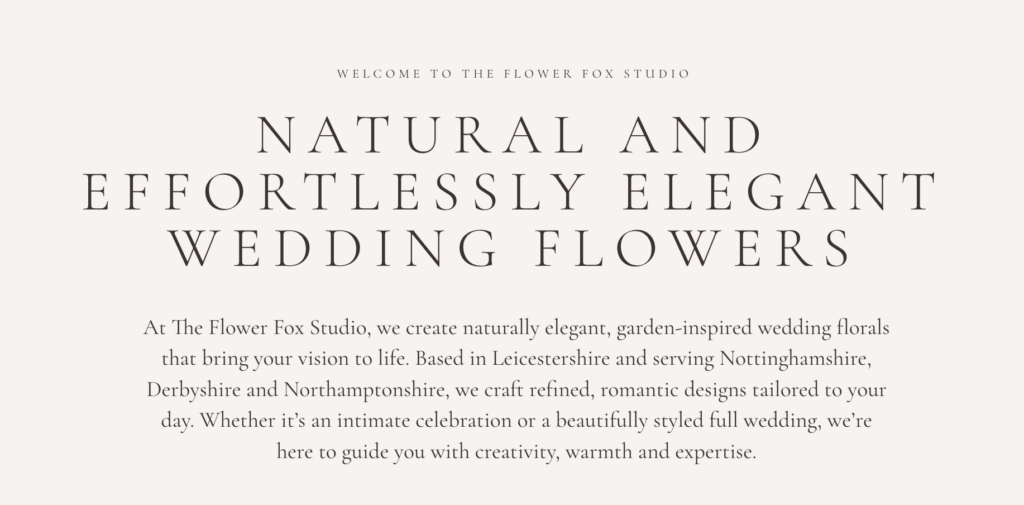
You must clearly state your location on your homepage and services page.
For example,
Wedding florist in Bristol
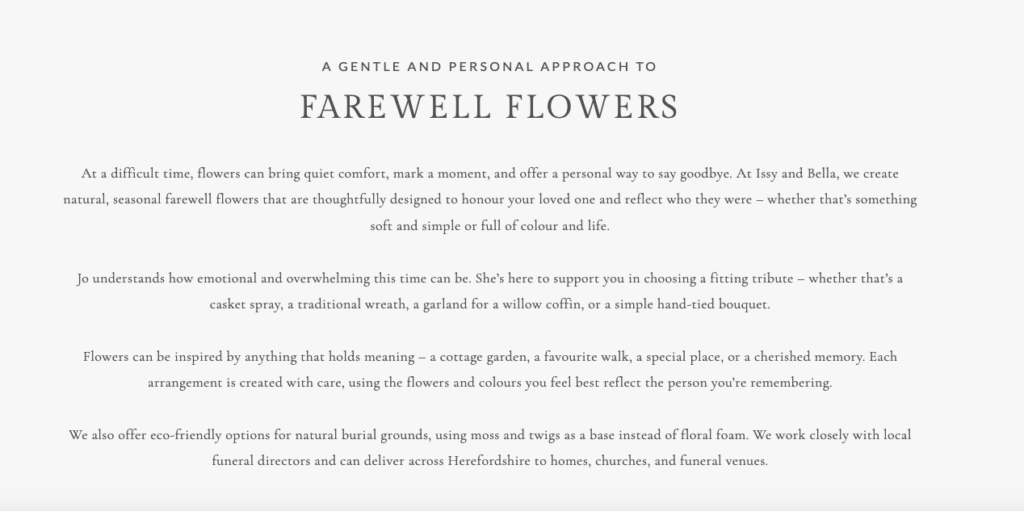
Funeral florist in Herefordshire
Event florist in the Cotswolds
Add your main location naturally into your headings and body copy. This is not about stuffing keywords. It is about clarity.
If someone searches “wedding florist Bristol” and you never mention Bristol clearly, Google cannot confidently show you.
2. Optimise Your Page Titles and Meta Descriptions
Your page title is what appears in Google search results.
Instead of,
Home
It should say something like,
Wedding Florist in London, Pesh Flowers
Each page should have a unique title and meta description that includes your service and your location.
Focus on:
Service, Location, Brand name
This small change alone can make a noticeable difference over time.
3. Create Dedicated Service Pages
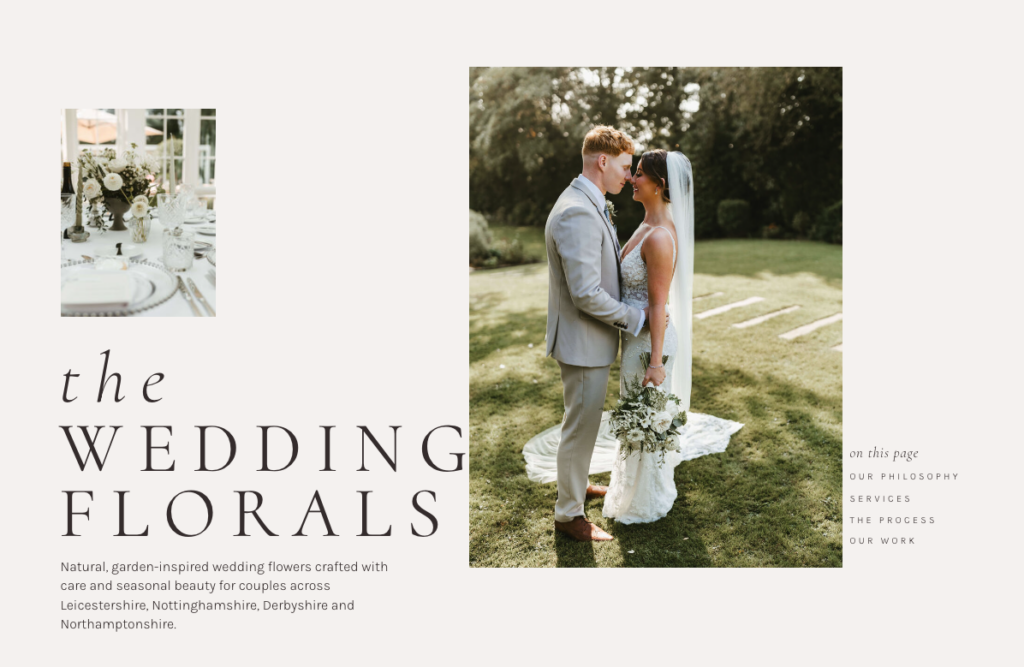
If you offer weddings, funerals, and events, each should have its own page.
Google ranks pages, not vague lists.
A dedicated Wedding Florist Bristol page gives you far more opportunity to rank than a single Services page with everything combined.
On each service page include,
Who it is for
What you offer
Your approach
Your location
Frequently asked questions
The more specific and helpful the page, the better.
4. Use Local Keywords Naturally in Blog Content
Blogging is powerful for local SEO.
Write posts like,
How to Choose Your Wedding Florist in Gloucestershire
Seasonal Wedding Flowers in Somerset
Top Wedding Venues in the Cotswolds for Outdoor Ceremonies
When you write about your area, venues, or seasonal flowers locally, Google starts to associate your website with that location.
This builds long term authority.
5. Optimise Your Images Properly
Many creatives upload images titled,
IMG_8394.jpg
This is a missed opportunity.
Rename your images before uploading.
For example,
cotswolds-wedding-florist-bouquet.jpg
Also complete the alt text field with a clear description that includes your location where relevant.
Google cannot see images, but it can read image data.
6. Set Up and Optimise Your Google Business Profile
If you have not claimed your Google Business Profile, start there.
Ensure:
Your business name is correct
Your address or service area is accurate
Your website is linked
Your services are listed
You request reviews
Reviews are powerful local ranking signals.
Encourage happy clients to mention your location and the service in their review.
For example,
Rebecca created the most beautiful wedding flowers for our Cotswolds venue.
That kind of wording strengthens local association.
7. Improve Internal Linking
When you mention weddings in a blog post, link to your weddings page.
When you mention a venue, link to your relevant portfolio.
Internal linking helps Google understand your website structure and hierarchy.
It also keeps visitors on your site longer, which is a positive signal.
Why Local SEO Matters More Than Social Media
Social media is rented space.
Google search is intent driven.
When someone searches,
Wedding florist near me
They are actively looking to book.
Local SEO places you in front of people who are already ready.
That is why it matters.
Final Thoughts
Ranking locally is not about tricks.
It is about clarity, structure, and consistency.
Most creatives’ websites do not need a complete rebuild.
They need strategic refinement.
If you would like a professional review of your website structure, messaging, and local SEO signals, my Website Clarity Review looks at exactly this.
Free Download, Local SEO Checklist for Florists
If you would like a simple checklist to work through, I have created a free Local SEO Checklist for Florists.
It walks you through exactly what to review on your website to improve your local visibility.
You can download it here.