

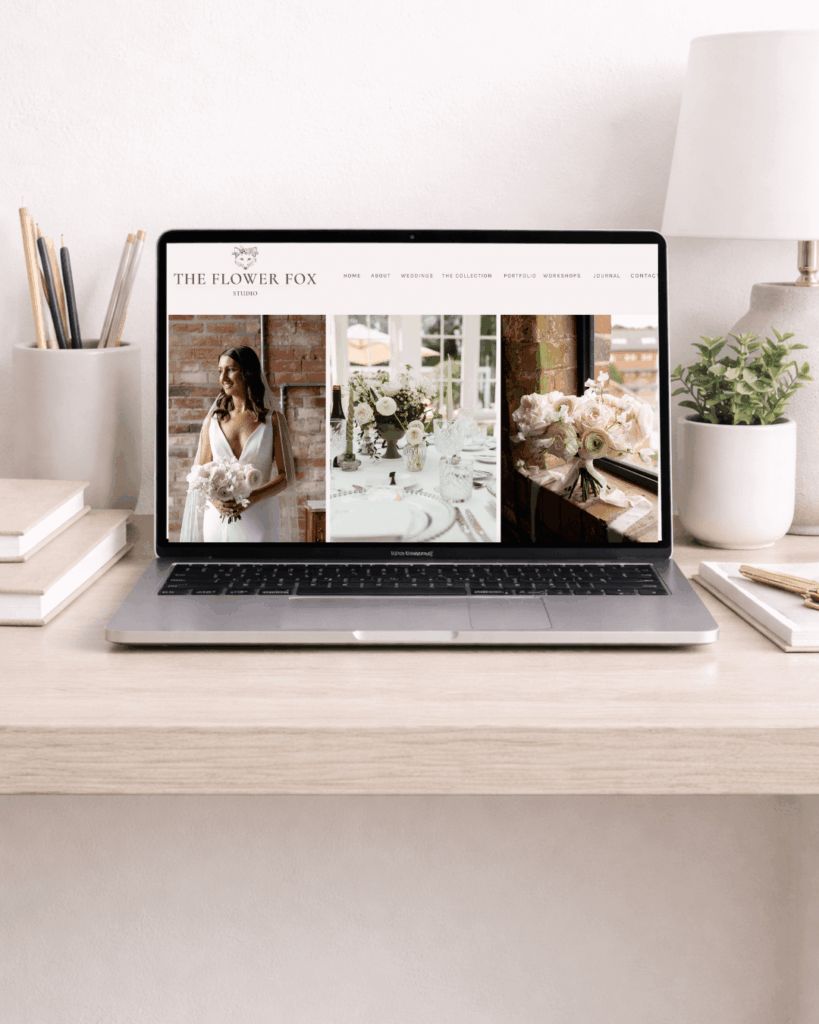
A beautiful website is a wonderful thing.
For many creative businesses, it’s the first place potential clients encounter your work — and first impressions matter. But if your website stops at “looking nice”, it may not be doing its job as well as it could.
Your website should work quietly in the background: guiding visitors, setting expectations, and supporting your day-to-day workflow.
A Pretty Website Isn’t the Same as a Useful One
Design is important — but design alone isn’t enough.
A website can be visually stunning and still:
- Leave visitors unsure what to do next
- Attract the wrong type of enquiries
- Create extra admin work behind the scenes
When this happens, your website becomes something you maintain, rather than something that actively supports your business.

Your Website Is Part of the Client Journey
Every page on your website is part of a larger story.
From the moment someone lands on your site, they are subconsciously asking:
- Is this right for me?
- Can they do what they did for them, for me?
- Do I trust this business?
- What happens next?
A well-designed website gently answers those questions through:
- Clear navigation
- Considered page flow
- Thoughtful content hierarchy
It doesn’t rush — but it does guide.
Clarity Builds Confidence (For You and Your Clients)
A clear website doesn’t just help your visitors — it helps you.
When your website clearly explains:
- Your services
- Your process
- Your boundaries
You spend less time answering the same questions, and more time focusing on the work you enjoy.
Clarity creates confidence on both sides of the screen.
Design and Structure Should Work Together
The most effective websites balance beauty with structure.
This means:
- Design that reflects your brand and personality
- Layouts that prioritise readability
- Content that is easy to scan and understand
- Clear calls to action that feel natural, not pushy
When design and structure work together, your website becomes intuitive — not overwhelming.
Your Website Should Support Your Workflow
Your website isn’t separate from how you work — it’s part of it.
A considered website can:
- Collect the right information at enquiry stage
- Set expectations before a client gets in touch
- Integrate with your systems and processes
- Reduce unnecessary admin
When your website supports your workflow, it becomes a tool — not a task.
A Website That Grows With You
As your business evolves, your website should be able to evolve with it.
That might mean:
- Refining your messaging
- Adjusting your services
- Updating how enquiries are handled
- Improving how information flows
This is one of the reasons I love Showit so much.
Because it’s design-led and flexible, Showit makes it easy to update your website as your business grows — without needing to rebuild everything from scratch. Pages can be refined, sections added or removed, and content updated in a way that feels intuitive rather than technical.
A flexible, well-structured website gives you room to grow, adapt, and respond to your business as it changes — without constant reworking or unnecessary complexity.
A More Thoughtful Approach to Web Design
A successful website isn’t about trends or ticking boxes.
It’s about creating an online space that:
- Reflects the quality of your work
- Guides the right clients towards you
- Supports your business behind the scenes
When your website does more than just look pretty, it becomes a quiet, reliable part of your business — working for you every day.
What It’s Like to Work Together
Working in the creative industry means I understand both sides of the process.
I’m comfortable with the technical details — how websites are built, how systems connect, and how everything functions behind the scenes. But I also understand what your clients are actually looking for when they land on your website.
Because I work closely with florists and creative businesses, I can often spot what isn’t working before we’ve even spoken. That might be unclear messaging, a missing step in the enquiry journey, or a website that looks lovely but isn’t guiding visitors in the right way.
My approach is thoughtful and collaborative. I look at the full picture — your work, your clients, and how your business runs day to day — and help you make changes that feel natural, considered, and genuinely supportive.
The aim is never to overcomplicate things, but to create clarity and confidence for both you and your clients.

I hope you found this useful.
If you’d like to be part of The Notebook — a small, thoughtful community where I share notes on branding, websites, and systems throughout the year — you can sign up below.
Until next time,