


You can have the most beautiful website in the world, but if your ideal clients can’t find it, it’s not doing its job.
SEO (Search Engine Optimisation) can sound complicated. Keywords, algorithms, rankings, metadata… It’s very easy to put it into the I’ll deal with that another day pile.
But you don’t need to become an SEO expert to improve how easily your business can be found online.
If you’re a florist, photographer, wedding supplier or another creative business working within a particular area, there are some relatively simple things you can do to help Google understand what you do, where you work and who your website is relevant to.
Here are seven places I’d start.
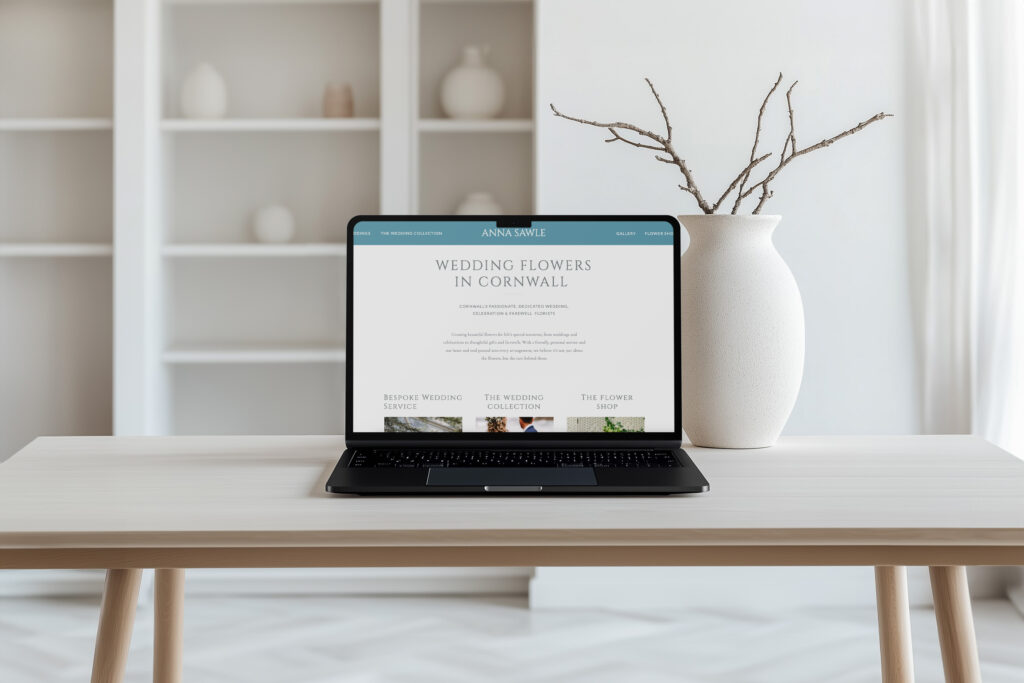
1. Tell Google where you actually work
This sounds incredibly obvious, but it’s something I see missing from creative business websites surprisingly often.
We spend lots of time writing lovely copy about our style, approach and experience, but forget one of the most basic pieces of information:
Where are you?
Think about how your potential clients might actually search.
They probably aren’t typing “beautiful romantic wedding flowers” into Google.
They’re much more likely to search for something like:
Wedding florist Cotswolds
Wedding photographer Bristol
Brand designer Gloucestershire
Your location doesn’t need to be awkwardly squeezed into every paragraph of your website. Instead, use it naturally within your headings, page copy, footer and contact page.
And if you work across several areas, mention those too.
The aim isn’t to repeat the same phrase over and over again. It’s simply to make it very easy for both your visitors and Google to understand where you work.
2. Check your page titles and meta descriptions
This is one of those little website jobs that’s very easy to forget.
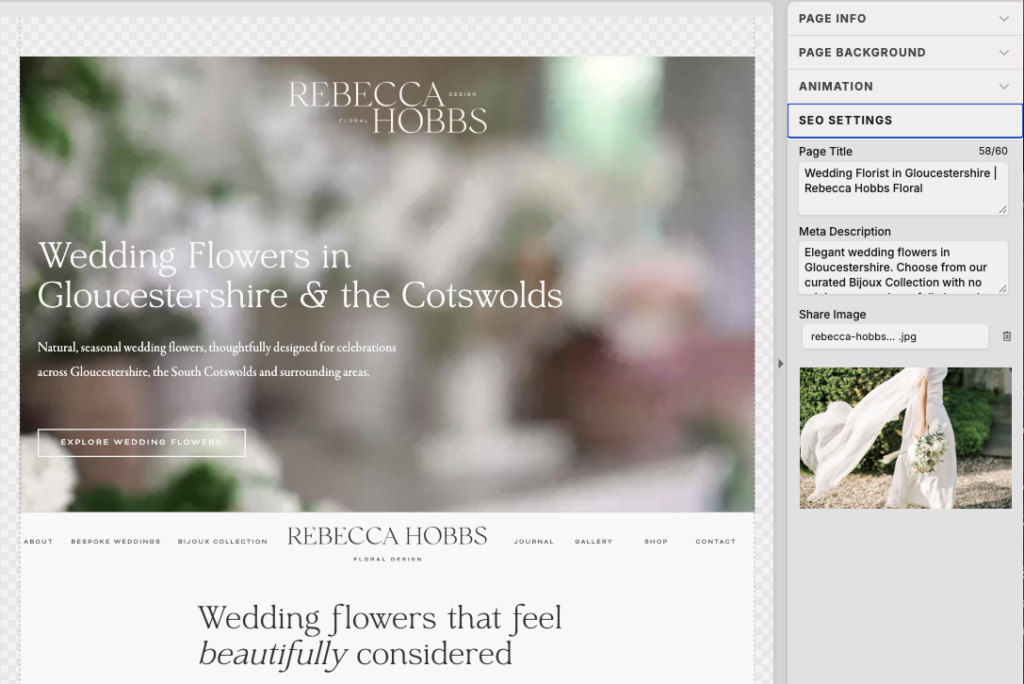
Every important page of your website should have its own page title and meta description.
Your page title helps search engines understand what that particular page is about. So rather than simply calling a page:
Services
you could use something more descriptive, such as:
Wedding Florist in the Cotswolds | Business Name
Your meta description is the short description that may appear underneath your page title in search results.
Use it to explain clearly what someone will find on the page and give them a reason to click.
You don’t need to cram it full of keywords. Write for an actual person first.
3. Don’t forget about your Google Business Profile
If you work locally, your Google Business Profile can be incredibly useful.
Make sure your business information is accurate, your website is linked and your services are up to date.
Add new photographs regularly and encourage happy clients to leave reviews.
Reviews aren’t just reassuring for potential clients. They also provide Google with more information and signals about your business.
If you haven’t looked at your Google Business Profile for months (or you haven’t created one yet), add it to this week’s to-do list.
Want a little help with your own SEO?
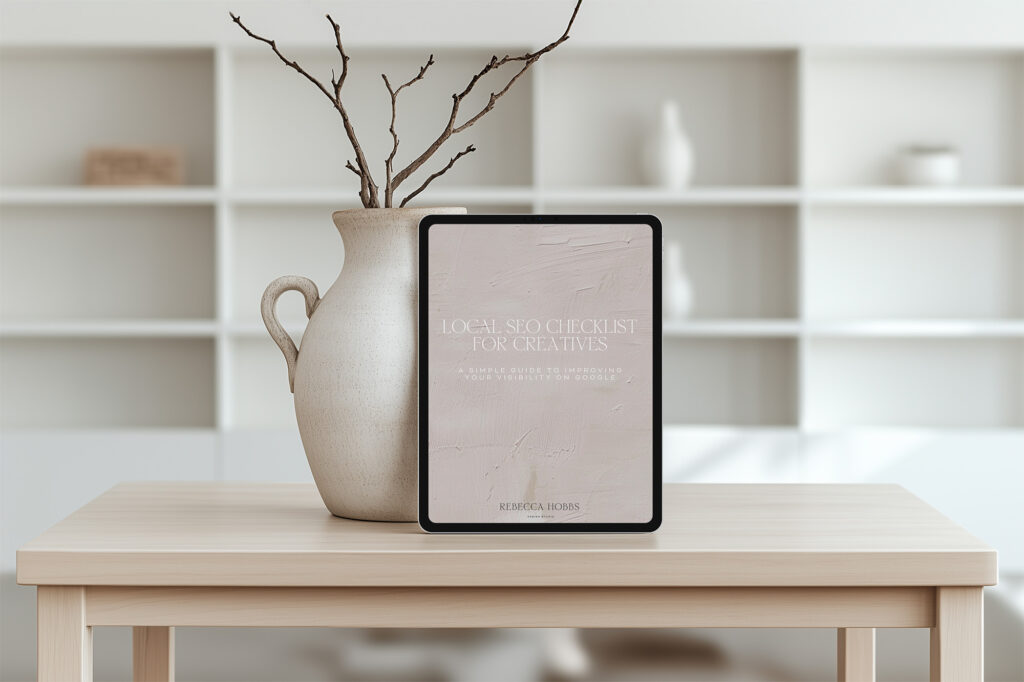
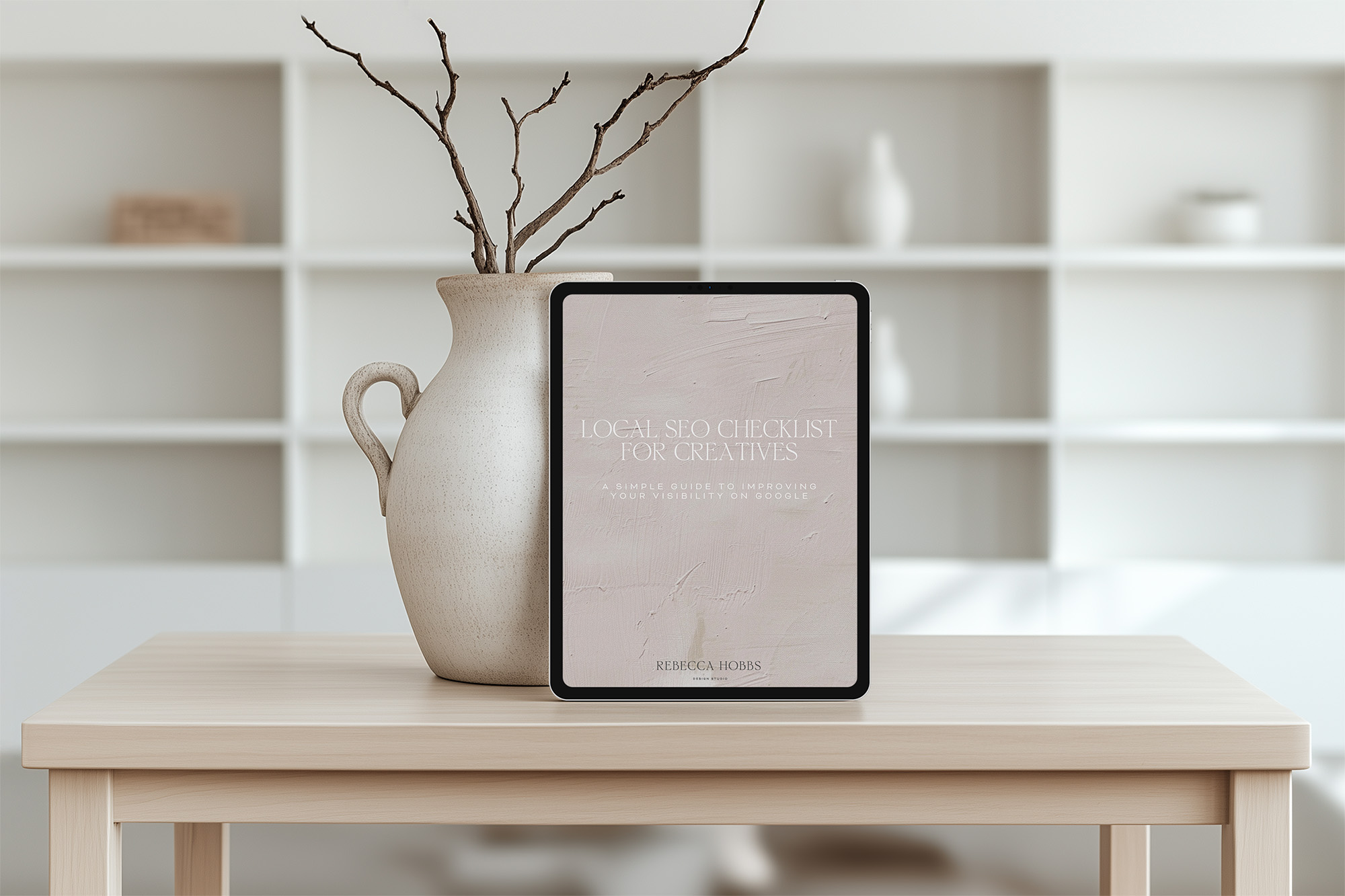
I’ve created a free Local SEO Checklist to help you work through some of the things that can make it easier for potential clients to find your creative business online.
You don’t need to tackle everything at once. Save the checklist and work through it a little at a time.
Download the Free Local SEO Checklist
4. Give your images a little attention
Creative businesses tend to have very image-heavy websites, which is wonderful for showing potential clients what you can do.
But those images can also give search engines useful information.
Before uploading an image, consider giving the file a descriptive name rather than leaving it as something like:
IMG_4837.jpg
For example:
cotswolds-wedding-flowers-kingscote-barn.jpg
is far more descriptive.
You should also add appropriate alt text to your website images.
Alt text is primarily there for accessibility, describing an image for someone who can’t see it. So it should accurately describe what’s actually in the photograph rather than becoming somewhere to cram in as many keywords as possible.
A little bit of housekeeping when you’re uploading images can make your website better for visitors as well as search engines.
5. Talk properly about the services you want people to find
If you offer several services, don’t hide all of them inside one small section on your homepage.
Give the important ones enough space.
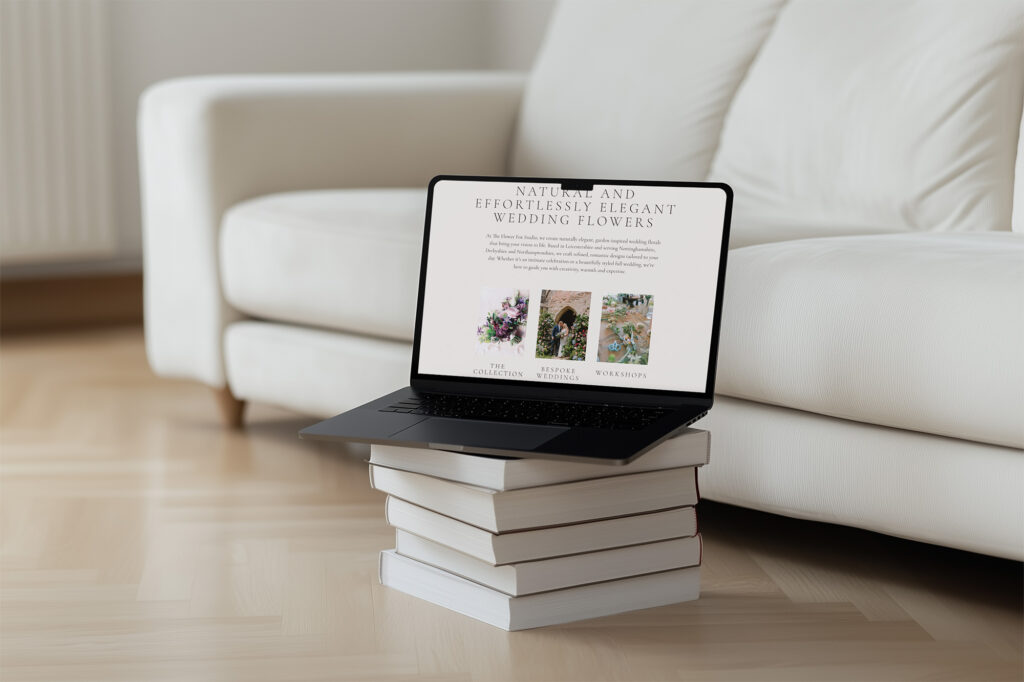
For example, a florist might offer full-service wedding flowers, smaller wedding flower collections and workshops.
Those are three quite different things that potential clients may be searching for.
Where appropriate, having dedicated pages for your main services gives you much more opportunity to explain what you offer, answer questions and help Google understand that part of your business.
It also gives potential clients somewhere useful to land when they find you through a search.
Think particularly about the work you want more of.
Does your website give that service the prominence it deserves?
6. Use your blog to answer the things people are already searching for
Your blog doesn’t need to be a diary of everything happening in your business.
Used strategically, it can be one of the most useful parts of your website.
Think about the questions your clients regularly ask you.
Could one of those become a blog post?
You could also write about real projects, venues you regularly work at, locations you cover or give genuinely helpful advice around your service.
For example, instead of simply sharing photographs from a wedding, a florist could write about:
Wedding Flowers at [Venue Name]
You can still show the beautiful photographs and tell the story of the wedding, but you’re also creating a useful page about a venue that future couples may be searching for.
The important thing is to create content that is genuinely useful. Don’t write a blog post just because somebody told you that you should be blogging.
7. Help people move around your website
Finally, don’t think of every page and blog post as something that exists on its own.
Link related content together.
If you mention a service within a blog post, link to that service page.
If you’ve written another article that goes into a subject in more detail, link to it.
And if someone has reached the end of a page, give them somewhere sensible to go next.
These are called internal links, and they help search engines understand how the different parts of your website relate to each other.
More importantly, they make your website easier for an actual person to use.
And ultimately, that’s what we’re trying to achieve.
You don’t need to do everything at once

If you’ve reached this point with another seven jobs added to your to-do list, don’t panic.
Start with one.
Have a look at your homepage today. Does it clearly say what you do and where you do it?
If it doesn’t, start there.
Then perhaps next week check your page titles. After that, look at your Google Business Profile.
Small improvements build up over time.
SEO isn’t about finding a magic keyword or doing something once and immediately appearing at the top of Google. It’s about making your website genuinely useful, clear and easy for both people and search engines to understand.
And the good news is that many of the things that make a website better for SEO also make it a much better website for your potential clients.
If you’d like a little help getting started, you can download my free Local SEO Checklist and work through it at your own pace.
And if you’d rather have another pair of eyes look at your website, you’re always welcome to get in touch. I offer website design, website updates and Website Clarity Reviews for creative businesses that want their website to work a little harder for them.
And remember, you don’t need to fix everything today. Pick one thing from the list above, make a start and come back to the rest when you have time.
A few small changes can make a surprisingly big difference to how easily the right people find your business.
Becci x